
· by Michael Blair, Nashville's Mover
A bad mover usually gives itself away before moving day, in how it quotes, what it wants paid up front and whose name ends up on the paperwork. A few checks before you book are worth the afternoon they take, and they are the same ones we would expect anyone to run on us.
How do you verify a mover’s registration?
An interstate mover needs a USDOT number and operating authority from the Federal Motor Carrier Safety Administration, the authority usually shown as an MC number. The federal broker rule at 49 CFR 371.105 lets a broker hand a household move only to a carrier holding both. Put the number into FMCSA’s SAFER Company Snapshot, which searches by USDOT number, MC number or company name and shows the company’s registration details and safety record, then check its insurance filings in FMCSA’s separate Licensing and Insurance search.
For moves within Tennessee, the state’s permit is called Intrastate Authority, and the Tennessee Department of Revenue’s page on it lists a Form H cargo insurance certificate among the filings for carriers that haul household goods. We know of no public lookup for it, so ask the company for its authority and a certificate of insurance. A company unwilling to provide either is answering the question. Our post on what licensed and insured means for a Tennessee mover takes both registrations and the insurance apart in more detail.
Why should a mover survey your house first?
For an interstate move, 49 CFR 375.401 requires the mover to survey your household goods and base a written estimate on it, and 49 CFR 375.103 allows that survey on site or over live or recorded video clear enough to identify what is moving. You can waive it, but only in writing. A full-house price given over the phone with neither a survey nor a waiver is, to us, a guess. On a non-binding estimate the guess gets settled against the actual weight, and 49 CFR 375.405 lets the mover require up to 110 percent of the estimate when it delivers.
The survey is what the written estimate rests on, and that estimate, marked binding or non-binding, is the paper you will hold up if the bill changes. Keep your copy, along with anything you sign on the day. What each type commits a mover to is in our post on binding and non-binding quotes, and for a move that stays inside Tennessee we would still ask for the survey.
- Look up the USDOT number in SAFER and the insurance filings in Licensing and Insurance
- Ask for an in-person or video survey
- Get the estimate in writing, marked binding or non-binding
- Be wary of large deposits, especially in cash
- Get the carrier’s name and USDOT number before the day, and check the truck against it
The warning signs
None of these comes from a regulation; they are what would make us walk away. A quote well below the others without an explanation. A demand for a large deposit, particularly in cash. A generic company name answering the phone. No street address, which a broker has no excuse for, since 49 CFR 371.107 requires a household goods broker to show its street address, city and state in its ads and on its website.
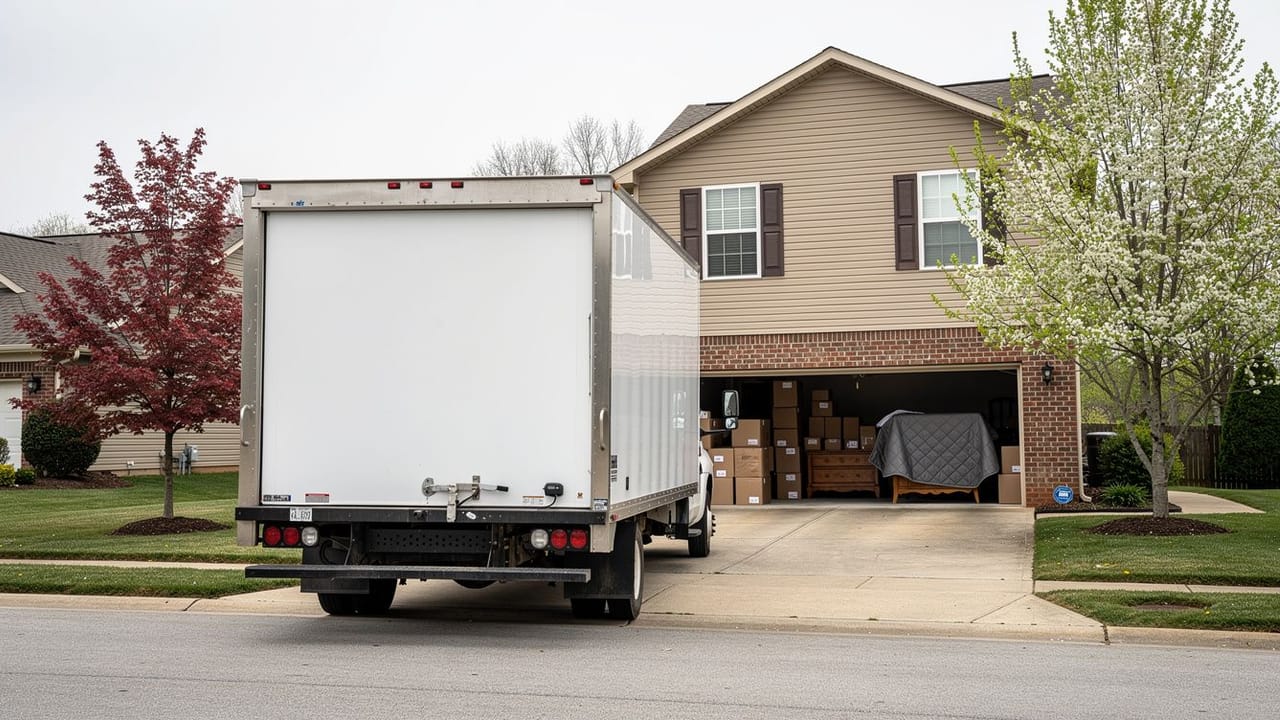
And on the day, a truck with a different name from the company you booked can mean the job was passed to someone else. The name alone does not prove it, so get the carrier’s name and USDOT number in advance and check the truck and the paperwork against them.
What is a moving broker?
A broker sells the job and arranges for a carrier to do it; the carrier is the company with its own FMCSA operating authority that loads the truck. Brokering a household move is legal and regulated under 49 CFR Part 371, and an interstate household goods broker has to say in its ads and on its website that it is a broker and will not move your goods itself.
The same rules give you a way to vet who turns up. Under 49 CFR 371.109, a broker must give anyone who contacts it a list of the authorized carriers it uses, with their USDOT and MC numbers, along with a statement that it is not a motor carrier. Ask for that list, look the carriers up, and ask which one will do your move and whether you will be told before the day. For a long move out of Nashville, our long-distance moving page says how we quote one, and you can ask us for a written estimate on yours.
Sources
- FMCSA, 49 CFR 371.105, Must I use a motor carrier that has a valid U.S. DOT number and valid operating authority? (eCFR) — A household goods broker may use only a carrier with a valid, active USDOT number and FMCSA operating authority
- FMCSA, SAFER Web Company Snapshot — Search by USDOT number, MC/MX number or company name; identification, size and safety record
- FMCSA, Licensing and Insurance public search — Insurance and process agent filings for registered carriers and brokers
- Tennessee Department of Revenue, Intrastate Authority — In-state for-hire carriers need Intrastate Authority; Form H cargo insurance for carriers hauling household goods
- FMCSA, 49 CFR 375.401, Must I estimate charges? (eCFR) — Physical survey and written estimate for interstate moves; written waiver; binding or non-binding stated; form of payment at delivery
- FMCSA, 49 CFR 375.103, What are the definitions of terms used in this part? (eCFR) — A physical survey may be on site or virtual, by live or recorded video
- FMCSA, 49 CFR 375.405, How must I provide a non-binding estimate? (eCFR) — Payment at delivery capped at 110 percent of a non-binding estimate
- FMCSA, 49 CFR 371.107, What information must I display in my advertisements and Internet Web homepage? (eCFR) — Household goods brokers must show their street address, city and state, and their broker status, in ads and on their websites
- FMCSA, 49 CFR Part 371, Brokers of Property (eCFR) — Brokers are regulated; household goods brokers must state they will not transport the goods
- FMCSA, 49 CFR 371.109, Must I inform individual shippers which motor carriers I use? (eCFR) — Brokers must give each prospective shipper a list of the carriers they use with USDOT and MC numbers, and a statement that they are not a motor carrier
FAQ
Checking a Moving Company Before You Book — questions
How do I check a moving company is legitimate?
For an interstate move, look up the USDOT number in FMCSA’s SAFER Company Snapshot for its registration and safety record, and in FMCSA’s Licensing and Insurance search for its insurance filings. For a move inside Tennessee, ask for the company’s Intrastate Authority from the Department of Revenue and a certificate of insurance. Then ask for a survey and a written estimate, and be wary of any company that avoids both.
Should I pay a deposit to a mover?
Part 375, the federal rule for interstate moves, sets no rule on deposits, so this is our advice: a modest deposit is nothing to worry about, while a large one, and particularly a cash one, is a reason to slow down. On an interstate move the estimate has to say what form of payment the mover will accept at delivery, and on a non-binding estimate the most it can require then is 110 percent of the estimate. Be especially cautious of any request to pay a large sum before anything has happened.
What is the difference between a broker and a carrier?
A carrier is the company with its own FMCSA operating authority that does the move; a broker sells the job and arranges for an authorized carrier to do it. Both are legal. On an interstate move a broker must give you a list of the carriers it uses with their USDOT and MC numbers, so ask for it and ask which one is coming, because with a broker the company you researched is not necessarily the one that arrives.
What should I ask a moving company?
Ask for its USDOT number or Tennessee Intrastate Authority, a certificate of insurance, and an in-person or video survey with a written estimate marked binding or non-binding. Ask what deposit it wants and in what form, and get the carrier’s name and USDOT number before the day so you can check the truck.