
· by Michael Blair, Nashville's Mover
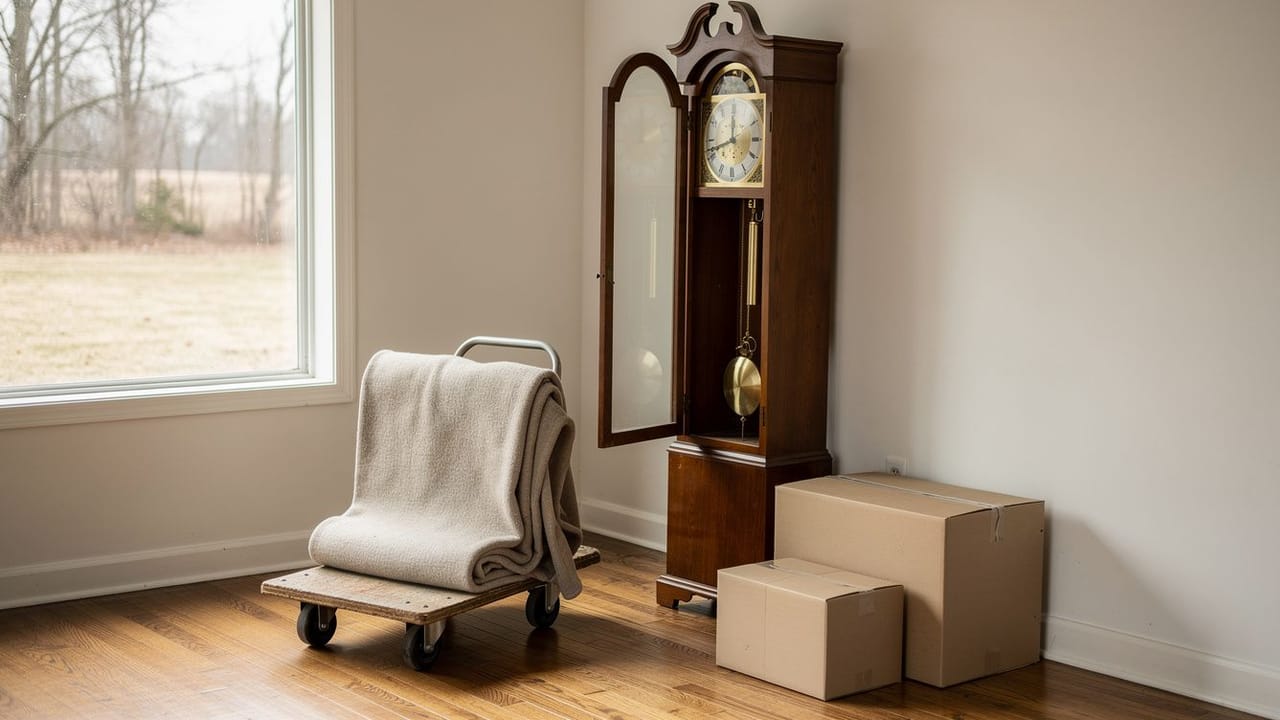
A grandfather clock looks like a piece of furniture, and it is carried like one, but the part that matters is hanging inside: a movement driven by heavy weights on cables or chains, a pendulum on a thin suspension spring, and on some clocks a set of long chime tubes. Tip the case with all of that in place and the weights swing into the glass, the cables jump their grooves and the pendulum bends.
The maker’s own preparation steps are short. Done in order, they are most of what keeps a clock running in its new house.
What has to come out of a grandfather clock before it moves?
The weights, the pendulum and, on a tubular movement, the chime tubes. Howard Miller’s guide to preparing a floor clock to be moved has you stop the pendulum, take the weights off, then remove the pendulum and the tubes. It says to handle the pendulum and weights with cotton gloves or a soft cloth, to pack every loose part securely, and never to wind the clock without the weights installed.
We pack each weight in its own wrap and mark which side it hung on, left, center or right, because they are not interchangeable even when they look alike. The pendulum goes flat in a long box so its rod cannot bend. Chime tubes are packed together and padded from one another, since a dent changes the note. The case keys and the crank go in the same box as the parts, so nothing has to be hunted for at the other end.
How do you keep the cables or chains from tangling?
Lock them in place before the weights come off. On a cable-driven clock, Howard Miller says to set foam blocks above the cable pulleys and wind the weights fully up, so the blocks keep tension on the cables once the weights are removed. On a chain-driven clock, it says to run a long wire or string through the chain links just below the sprocket and tie it off so the chains cannot slip.
Skipping this step is how most clocks get hurt on a move. Howard Miller’s article on an overlapped cable names moving the clock with the weights attached as one cause, along with lifting the weights by hand while winding. A cable that crosses itself or leaves its groove on the drum can catch and stop the clock, and the article says correcting an overlap is not covered by the warranty.
Can a grandfather clock be laid down to move it?
No. Howard Miller’s moving guide says to keep the clock upright while it is moved, and we load it that way: the case wrapped in pads with the door taped shut through the padding, set against the truck wall and strapped at more than one height so it cannot rock. It goes on near the end so it comes off early, before anything is stacked around it.
Upright matters most on stairs and through doorways, where the temptation is to tilt the case flat to clear the top. A tall case clock is narrow at the base and heavy at the hood, so we carry it with two people and a hand truck with a padded nose, one guiding the top. Howard Miller recommends hiring a professional furniture mover for the job, and it is the kind of piece our specialty moves are for, alongside the piano and the gun safe in our post on moving heavy specialty pieces.
Why does a grandfather clock stop after it is moved?
Usually because it is out of beat or because a cable has come off its groove. Clockworks, which supplies clock movements, explains in its cable-driven movement manual that a pendulum clock moved from one place to another will often stop within minutes until it is put back in beat, and that you can hear it: an uneven tick-tock instead of an even one. Many modern German movements reset themselves when the pendulum is given one wide swing. The same manual warns that twisting the pendulum can break its suspension spring.
If it is in beat and still stops, look at the cables. Howard Miller’s overlap article ties each drum to a job: the center drum keeps time, the left one strikes the hour and the right one plays the chime, so the symptom tells you which cable to check. Rehang the weights on the side each came from, with the cables seated in their pulleys or the chains on their sprockets.
A clock is also worth listing as an item of value on the inventory, which our post on what moving coverage actually pays explains. We move clocks across the area, including in Hendersonville, and if one is going with you, mention it when you ask for a quote.
Sources
- Howard Miller support, How to Prepare a Floor Clock to Be Moved — gloves or soft cloth; foam blocks above cable pulleys; wire through chain links; stop pendulum, remove weights, pendulum and chime tubes; never wind without weights; keep upright; hire a professional mover
- Howard Miller support, What If My Clock Has an Overlapped Cable? — causes of overlap including moving with weights attached; drum functions left, center and right; overlap correction not covered by warranty
- Clockworks, Cable Driven Instruction Manual — a moved pendulum clock stops until put in beat; uneven tick-tock; auto beat by over-swinging on most post-war German movements; twisting the pendulum can break the suspension spring
FAQ
Moving a Grandfather Clock Without Damage — questions
Do you have to take the weights off a grandfather clock to move it?
Yes. Howard Miller’s moving guide has you stop the pendulum and remove the weights before the clock moves, and its article on overlapped cables names moving the clock with the weights attached as a cause. Secure the cables or chains first, pack each weight separately and mark which side it hung on.
How do you secure grandfather clock chains for moving?
Howard Miller says to thread a long wire or string through the chain links just below the sprocket and tie it off, so the chains cannot slip off. On a cable-driven clock the step is different: foam blocks go above the cable pulleys and the weights are wound fully up before they come off.
Why won’t my grandfather clock run after moving it?
The usual reasons are that it is out of beat or a cable has jumped its groove on the drum. An uneven tick-tock means out of beat; Clockworks says many modern German movements reset with one wide pendulum swing. If it is in beat and still stops, check the center cable, which drives timekeeping.
What do the three weights in a grandfather clock do?
Howard Miller’s overlap article ties each cable drum to a job, facing the clock: the center drives timekeeping, the left strikes the hour and the right plays the chime melody. That is why the weights go back on the side they came from, and why the symptom points to the cable to check.
Should a grandfather clock ride upright in the moving truck?
Yes. Howard Miller says to keep a floor clock upright while it is being moved. We wrap the case in pads, tape the door shut through the padding, and strap it against the truck wall at more than one height so it cannot rock, with the weights and pendulum packed separately.